Coming Soon: g!Sites™ - Your website, built by gia™ in minutes. Join the Waitlist

If Truth is the Answer, What is Truth?

We live in a world drowning in content, flooded with opinions, and algorithmically manipulated by narratives dressed up as fact. Everywhere you turn, someone’s selling a version of the truth, polished, filtered, repackaged, and optimized for clicks.

But if truth is the answer, what is it really?

At gotcha!, we’ve stopped calling ourselves a marketing agency. That label’s too small, too transactional. What we are is a technology company involved in the presentation and validation of truth. In a noisy digital world, our job is to help businesses, platforms, and systems communicate what is real, not just what sounds good.

We don’t just build websites, run SEO, or launch campaigns. We architect clarity. We don’t sell visibility, we build trust. And trust begins with truth.

But truth isn’t simple. It’s layered, often inconvenient, and rarely owned by any single party. That’s why the question we ask, internally, with clients, through data, and with our AI, isn’t how do we sell more? but what’s actually going on here?

That’s where it starts. That’s what Gialyze™ is for.  That’s what the future of communication will depend on. Because as we move toward a world of AI agents, autonomous interfaces, and algorithmic interactions, truth will be the only differentiator that matters.


Truth Isn’t What You Think

We like to think of truth as a fixed point. A fact. A certainty. But in practice, truth is contextual, uncomfortable, and often avoided. There’s empirical truth: data, math, science. There’s personal truth: what we feel, what we believe. There’s functional truth: what works, even if it isn’t ideal.
And then there’s narrative truth: the kind most people live by without realizing it’s been constructed for them.

The small business owner who believes SEO is a scam. The startup founder convinced that a logo and pitch deck will bring funding. The marketing manager running reports that look good, even if the results aren’t.

They’re not lying. They’re just operating inside a version of the truth that no longer serves them.

At gotcha!, we encounter this every day.

We don’t argue or push. We investigate. We ask: “What’s actually happening?” Not what they want to happen. Not what they hope is happening. What’s real. We do this with tools. With systems. With research. With AI. But mostly, we do it with clarity of intention. Because truth isn’t a deliverable. It’s a discipline. And until a business is ready to face it, nothing else really works, not marketing, not strategy, not tech.


How We Discover Truth

Truth rarely shows up in spreadsheets. It leaks out in conversation.

We’ve found that the real insights, the ones that change the course of a project, don’t come from forms or KPIs. They come from a 10-minute tangent on a call with the founder. A moment of frustration from the marketing manager. An offhand comment like, “Our customers still don’t really know what we do.”

These aren’t just remarks. They’re signals.

At gotcha!, we listen for those signals. We chase them down. We dig until the fog clears. And then we bring AI, strategy, and systems to bear, not to decorate the problem, but to solve it from the inside out.

That’s what Gialyze™ is built for.

It’s not just a research tool, it’s a diagnostic lens. A way to peel back what a business thinks is happening and get to what’s actually at play:

  • Where is trust breaking down? 
  • What do customers actually experience? 
  • Is this a messaging issue… or a deeper misalignment? 
  • Are you ranking low on Google, or are you just invisible to your audience? 

From this clarity, the real work begins. And when we apply it across our platform, through g!Stream™, g!Places™, g!Reviews™, and more, it’s not just about marketing. It’s about presenting a business as it truly is, and then helping it evolve into what it was meant to become.

Because every campaign, every page, every AI-driven insight we generate is only as good as the truth it’s built on. And when we help a client see their truth clearly, everything else becomes easier, decisions, growth, even letting go of the stuff that never worked in the first place.


The Future: When Agents Talk to Agents

The old web was built on content. The current web is built on optimization. But the future? It’ll be built on agents, AI assistants negotiating on our behalf. Soon, people won’t “search” for answers. They’ll just say, “Gia, find me a commercial real estate broker I can trust,” or “Book me the best dentist nearby with openings this Friday.” No scrolling. No comparison. No ads. Just action, filtered by AI, refined by context, and powered by truth.

So the real question becomes: Who do these agents trust?

That’s where the new race begins. In that future, visibility won’t come from shouting louder. It will come from being validated, referenced, and recognized across data layers built on truth.

At gotcha!, we’re building toward that future now. We’re creating the infrastructure, platforms, and AI tools that communicate verified, useful, accurate information about businesses, at scale. We don’t do fluff. We do structured data, verified identity, consistent reputation, and deep insight, so that when machines talk to machines, your business is the one that gets chosen.

That’s what our platform does. That’s what GIA is training for. That’s what g!Stream™, g!Places™, g!Reviews™, and our entire roadmap are aligned around:  A world where communication is no longer broadcast, it’s validated.

And only those who anchor themselves in truth will rise.


The Truth Will Find You

In business, most people aren’t lying. They’re just overwhelmed, under-informed, and stuck in an outdated version of the truth. They’re running with assumptions that used to work. Marketing tactics that used to deliver. Teams that used to fit. Products that used to matter.

But the game has changed. AI isn’t coming, it’s here. And the businesses that survive won’t be the loudest. They’ll be the clearest.

At gotcha!, we don’t just help you grow, we help you see.


The Cost of Shallow Solutions

There’s a growing wave of marketers offering quick fixes: “Run this campaign.”  “Install this funnel.”  “Buy these leads.”  “Just do TikTok.”

It’s not that they’re dishonest, it’s that they lack depth. They mistake activity for strategy.  And in doing so, they burn through the most limited resource a business has: financial runway. We’ve watched business owners trust the wrong vendors and lose the very funds they needed to build something that could actually scale. They weren’t sold truth.  They were sold tactics.
And tactics, without context, without research, without clarity, are expensive distractions.

We built gotcha! to replace that noise. To expose what’s real. To align budgets with reality. To stop the bleeding.


You Don’t Need More Hype, You Need More Truth

We built GIALYZE™ to uncover truth.
We built GIA™ to act on it.
And we built our platform to present it clearly, to customers, to search engines, to AI agents, to investors, to teams.

So if you’re tired of guessing,
If you’re done wasting time and money on empty promises,
If you’re ready to build something that lasts, 

Then start with truth.

Because everything real begins there.


Let’s gialyze your business.

 

Pythonic Paths: Building Scalable AI Solutions for Marketing

If you’ve ever built something with AI in mind, you’ve probably touched Python.

But here’s what’s often missed: building AI for marketing isn’t just about making a model work in a Jupyter notebook, it’s about engineering a system that performs, adapts, and survives in production.

At gotcha!, Python is the toolkit we reach for when we need to move from an idea on a whiteboard to a deployable, intelligent service. It’s not always perfect, but it’s almost always right.

🧪 Prototypes Are Easy. Products Are Hard.

The early stages of AI development feel exciting, a proof of concept here, a fine-tuned model there. You might have a script that generates copy or classifies audience segments. It works… in theory.

But then the reality hits:

  • How do you trigger it on real data coming from actual users?
  • How do you keep it fast when hundreds of requests hit at once?
  • How do you version, monitor, and improve it without breaking things?

That’s when engineering begins.

🧱 Python in the Real World

We’ve written more Python than we care to count, but some patterns never change. Here’s what works when moving Python AI from research to real-world deployments:

  • Keep intelligence decoupled from interface: Never mix your model logic with your routing or views. Your model shouldn’t care who asked the question, only what it is.
  • Async everything: AI workloads can spike. Python’s, especially FastAPI’s, async ecosystem lets us queue, buffer, and respond in real time without melting servers.
  • Stateless where possible, memory-aware where needed: Marketing interactions benefit from memory, but memory should be intentional, not implicit. Python lets us architect both stateless APIs and memory-enriched sessions, depending on the use case.
  • Fail loudly during development, quietly in production: Clear exception handling, smart retries, and proper logging aren’t optional, they’re critical.

And honestly? Most of this has nothing to do with AI and everything to do with treating Python like a real backend language.

🛠 How We Structure Python AI Projects

We don’t believe in monoliths. Our architecture is service-based by default. A typical AI-powered solution we build is made of small, composable Python services:

  • One service might handle semantic search using a local vector store
  • Another might call out to an LLM with structured prompt chains
  • A third handles data enrichment, streaming, or CRM integration

Each one is testable, replaceable, and deployable on its own, which means we can improve pieces without rewriting the system.

We use background queues for heavy lifting, REST APIs for orchestration, and memory storage for agentic behavior. Python gives us the flexibility to move between each of these layers without friction.

📏 Performance, Pragmatism, and What Actually Matters

Let’s talk about performance, because Python has its critics.

Yes, if you’re running a high-frequency trading system or ML model training on raw tensors, you might want C++ or Rust. But in AI-powered marketing workflows, latency often comes from model inference, API calls, or I/O, not from Python itself.

The performance gains we care about most are:

  • Faster iteration cycles
  • Faster onboarding of new logic
  • Faster recovery from failure

That’s what Python gives us, and that’s why we keep using it.

📦 Packaging Intelligence for the Long Term

We treat every AI component like a product. That means:

  • We version everything, from model checkpoints to prompt templates
  • We write docs and internal usage contracts
  • We containerize and ship models with defined resource envelopes
  • We monitor what the AI does, and what it doesn’t

None of this is glamorous. But it’s what makes the difference between an idea that demos well and a system that survives contact with real users.

📚 Lessons We’ve Learned (the Hard Way)

Here are a few things we’ve learned building Python AI systems for marketing teams and real clients:

  • Simple is sustainable: Avoid “clever” hacks. Go for boring, readable code that someone else can understand next month.
  • Logs are your lifeline: Don’t rely on print statements. Structured logs with trace IDs will save your sanity when things break.
  • AI needs testing too: Validate not just that your function works, but that your model behaves as expected when the data shifts.
  • Don’t trust input: Ever. Not even from your own CMS. Clean it, constrain it, and defend against garbage-in.

🧠 Final Thought

Python has been a constant companion in our AI development at gotcha!. But we’re not fanboys, we’re engineers.

We like Python not because it’s trendy, but because it’s practical, expressive, and deeply connected to the AI ecosystem we build in.

If you’re thinking about scaling your own AI-driven workflows, whether it’s for marketing, support, content, or personalization, don’t just chase the model hype. Build a pipeline, a structure, and a mindset that can handle change.

Python gives you that if you treat it right.

Gamma is Presentation Software, Not a Full-Fledged Website Platform

Gamma positions itself as an innovative, no-code tool for crafting beautiful digital experiences, but let’s be clear: at its core, Gamma is presentation software. It’s optimized for internal storytelling, pitch decks, and slide-style navigation, not for the complexities of running a high-performance website. The underlying architecture is built for ease of presentation, not technical scalability.

While it may look sleek on the surface, Gamma lacks the foundational capabilities that modern businesses need from their websites, things like structured data, schema markup, canonical control, responsive logic, and search-optimized URL structures. Gamma doesn’t offer robust CMS functionality, nor does it support custom development, modular content scaling, or backend extensibility. That’s because it wasn’t designed to.

A structured website is more than just good-looking, it’s an intelligent system. Structure allows for clear content hierarchy, indexability by search engines, and intuitive navigation for users. It’s how Google understands what your site is about, how different pages relate to each other, and how to rank your content in meaningful search results. Structured content also enables rich snippets in search, facilitates accessibility standards, and powers integration with tools like analytics platforms, CRMs, and ad networks.

In contrast, Gamma’s flat, slide-based design lacks this underlying semantic structure. You’re essentially presenting content in a linear format with little to no depth or hierarchy. This makes it difficult for search engines to interpret, for users to explore at scale, and for businesses to optimize over time.

Trying to build your digital presence on a presentation tool is like trying to build your home out of cardboard. It may go up quickly and look clean on the outside, but it won’t stand up to the demands of the real world.


Zero SEO Infrastructure

One of the most critical failures of building a client’s website on Gamma is the total lack of SEO infrastructure. Gamma was not built with search engines in mind, it’s a presentation tool, not a search-optimized platform. That distinction matters.

Gamma doesn’t give you control over structured data (schema), which is essential for helping Google understand the context of your content, like whether a page is about a product, a service, an event, or a review. Without schema markup, you miss out on rich results in search listings, which directly reduces click-through rates and visibility.

You also can’t reliably optimize your metadata, including page titles, meta descriptions, and canonical tags. These aren’t just technical details, they are foundational levers that drive organic traffic. Without this control, Gamma-generated pages are invisible or irrelevant to Google’s indexing systems.

Furthermore, Gamma lacks any mechanism to build scalable content silos or implement strategic internal linking. That means you can’t create topic clusters, pass link equity, or build authority around core service areas. In short: you can’t grow.

Even if your Gamma-built site looks polished, it’s a ghost town to search engines. You may have great visuals and clever copy, but Google won’t index it properly, and your client will never rank for anything meaningful. You’ve essentially built a billboard in the desert, impressive to look at, but no one will ever drive by.

When SEO matters, and it always should, Gamma is not just a poor choice. It’s a liability.

No Integrated Marketing Stack

Today’s websites are not just digital brochures, they are living, data-driven platforms designed to attract, convert, and retain customers. That requires tight integration with your marketing stack. Gamma has none of it.

With Gamma, you have no access to conversion tracking or marketing pixels, which means you can’t run retargeting ads, track lead forms, attribute ad spend to sales, or measure ROI. For any business investing in digital advertising (Google Ads, Meta, LinkedIn, etc.), this is a deal-breaker.

There’s also no performance analytics, no ability to measure bounce rates, scroll depth, page load issues, exit intent, or conversion funnels. Without this insight, you can’t diagnose problems or optimize user journeys. It’s like flying blind.

Even more limiting: Gamma lacks blog functionality and content marketing tools, core components of any long-term inbound strategy. There’s no CMS, no tagging, no categories, no scheduling, and no way to build a proper knowledge base or SEO-optimized content hub.

And because Gamma doesn’t support A/B testing or modular experimentation, there’s no path to continuous improvement. You can’t test new headlines, iterate on CTAs, or refine user flow. What you launch is what you get, frozen in time.

In short, Gamma can’t support real marketing. It’s a static experience with no backend intelligence. For a modern business, this isn’t just a limitation, it’s a growth ceiling.

“Cheap” Now Means Expensive Later

On the surface, Gamma might seem like a smart cost-saving choice. It’s fast, easy, and low-cost to set up. But that’s exactly where the danger lies.

The reality is, clients don’t need a website, they need results. They need leads, sales, visibility, and scalability. And Gamma can’t deliver those outcomes.

When the site fails to generate organic traffic, can’t be optimized, or lacks the infrastructure to support marketing, the business will hit a wall. They’ll either stall out or be forced to scrap the whole thing and start over from scratch, often at a much higher cost, and after losing precious time and momentum.

That’s when the true cost of a “cheap” decision becomes clear. The client pays twice:

  1. Once for the low-cost Gamma build that didn’t work. 
  2. Again for the professional, properly-architected site they should have built from the start. 

What’s worse? The cost of lost opportunity, months (or years) of marketing potential wasted, growth delayed, and brand credibility weakened.

Going cheap on foundational assets like a website isn’t saving, it’s stalling. And in today’s hyper-competitive digital landscape, stalled growth is just another name for falling behind.

Bottom Line: Gamma Is for Decks, Not for Growing a Business

Gamma has its place, it’s a sleek tool for internal decks, storytelling, and simple web-like presentations. But let’s not confuse convenience with capability.

It’s not a website platform.
It’s not built for SEO, not equipped for performance marketing, and not designed for data, scale, or long-term growth. Using Gamma for a business website is like trying to run a race in house slippers, it might feel comfortable at first, but it’s not made for the terrain.

If your goal is to actually grow a business, to rank, convert, scale, and win in the marketplace, you need more than a visual wrapper. You need a strategy-driven platform, optimized content, integrated analytics, real marketing tools, and a team that knows how to deliver ROI.

That’s where gotcha! comes in.
We don’t just build websites, we build performance engines. With our proprietary AI-powered tools, deep experience in SEO and conversion architecture, and a focus on long-term success, we help businesses move faster and smarter, without having to start over later.

Gamma is for decks. gotcha! is for results.

Beyond Automation: Crafting Personalized Marketing with AI

Let’s be real, “AI in marketing” isn’t the future. It’s the present. But what separates average automation from marketing that truly resonates?

The answer is personalization. And I’m not talking about surface-level “Hi, {First Name}” personalization. I mean real, deep, behavior-based, predictive personalization, the kind that adapts to each user in real-time and delivers tailor-made experiences.

At gotcha!, this is exactly where we’re pushing boundaries.

🧠 Why Generic Marketing Is Dead

The traditional marketing playbook, mass emails, static landing pages, and simplistic segmentation are officially obsolete. Today’s customers expect more. Much more.

They expect you to know who they are, what they need, and when they need it, before they ask.

That’s a tall order for any marketing team. But for AI? It’s just another data puzzle waiting to be solved.

The modern consumer is flooded with content. Winning their attention requires more than a catchy hook. You need precision and intent-driven delivery. That’s what we aim for with every tool we build.

🤖 The gotcha! Approach to AI-Driven Personalization

At gotcha!, AI isn’t just a buzzword we sprinkle on top of marketing, it’s the foundation behind everything we’re building.

Our approach isn’t about automating tasks for the sake of efficiency. It’s about designing intelligent systems that understand, adapt, and evolve with each interaction. Whether it’s streamlining content strategy, enhancing location-based presence, or enabling real-time, intelligent conversations, our AI doesn’t just support the experience. It architects it.

You can see this in action across the gotcha!Suite:

  • g!Stream constantly scans, curates, and publishes high-intent, relevant content across channels, all orchestrated by AI that understands what your audience wants to read, not just what you want to say.
  • g!Places intelligently localizes brand presence, creating SEO-optimized content that positions businesses to be found and trusted anywhere.
  • g!Chat brings conversational AI into play, enabling brands to communicate in real-time with their audience using contextual memory, brand-aligned tone, and zero friction.

What ties all of this together is personalization. Not personalization as in name tags, but real contextual understanding driven by AI that’s been gained from thousands of micro-interactions across campaigns and industries.

This is the next generation of digital marketing, and we’re building it from the ground up.

⚙️ Under the Hood: Our Tech Stack

Let’s just say… We’re not waiting for someone else’s roadmap.

What we’re working on behind the scenes is a full-stack AI architecture that doesn’t just plug into your workflow, it becomes part of your business DNA.

We’re evolving toward an ecosystem of autonomous AI agents that collaborate across verticals: from content creation to UX audits, ad ops to sales insights. These agents are memory-aware, RAG-powered, and increasingly self-directed.

They’re not just tools. They’re colleagues, and they’re learning fast.

Some whisper terms like vector search, semantic pipelines, autonomous prompt chaining, model context protocols (yeah, MCPs)… but we like to think of it as giving our AI a spine and a soul.

This isn’t just about scaling marketing. It’s about scaling intelligence across every node of the business.

Our vision? An agentic AI ecosystem so deeply embedded, it can power decision-making across your entire brand, from the first ad click to the last CRM event, and then optimize what comes next.

And the best part? We’re building all of this quietly, methodically, in-house. Because real innovation doesn’t come from buying it off the shelf, it comes from shaping it, line by line, model by model. This is not the future of marketing. It’s gotcha’s present, and we’re just warming up.

🧬 HI Meets AI: The Human Element

Even the smartest AI models need a compass. That compass? Human creativity.

We call it HI meets AI: Human Intelligence guiding Artificial Intelligence.

Yes, AI can generate thousands of content variants. But it’s your voice, your brand essence, your empathy that makes those outputs actually connect.

Our designers and software engineers work hand-in-hand to make sure every automated system reflects the brand’s soul, not just its data.

🔮 Where This Is Going

Marketing is evolving from “sending messages” to “understanding moments.” AI is the only scalable way to meet customers where they are, cognitively, emotionally, and contextually.

But here’s the truth: plug-and-play AI tools won’t get you there. You need a system that learns from your data, reflects your brand, and adapts to your user base.

That’s exactly what we’re building at gotcha! and it’s why our clients are ahead of the curve.

🧠 Final Thought

If your marketing strategy still treats AI as a checkbox, a plugin you slap on top of your funnel, you’re missing the point.

In this era, personalized marketing isn’t optional. It’s a survival skill.

And those who learn to tell stories through data, those who combine automation with authenticity, they won’t just compete. They’ll lead.

👉 Want to see how gotcha!’s AI systems could level up your marketing?

Let’s talk: https://gotchamobi.com/strategy-session/

The GIA Chronicles

The GIA Chronicles

The GIA Chronicles

Introducing: The GIA Chronicles

An AI-Powered Heroine for a World on the Brink

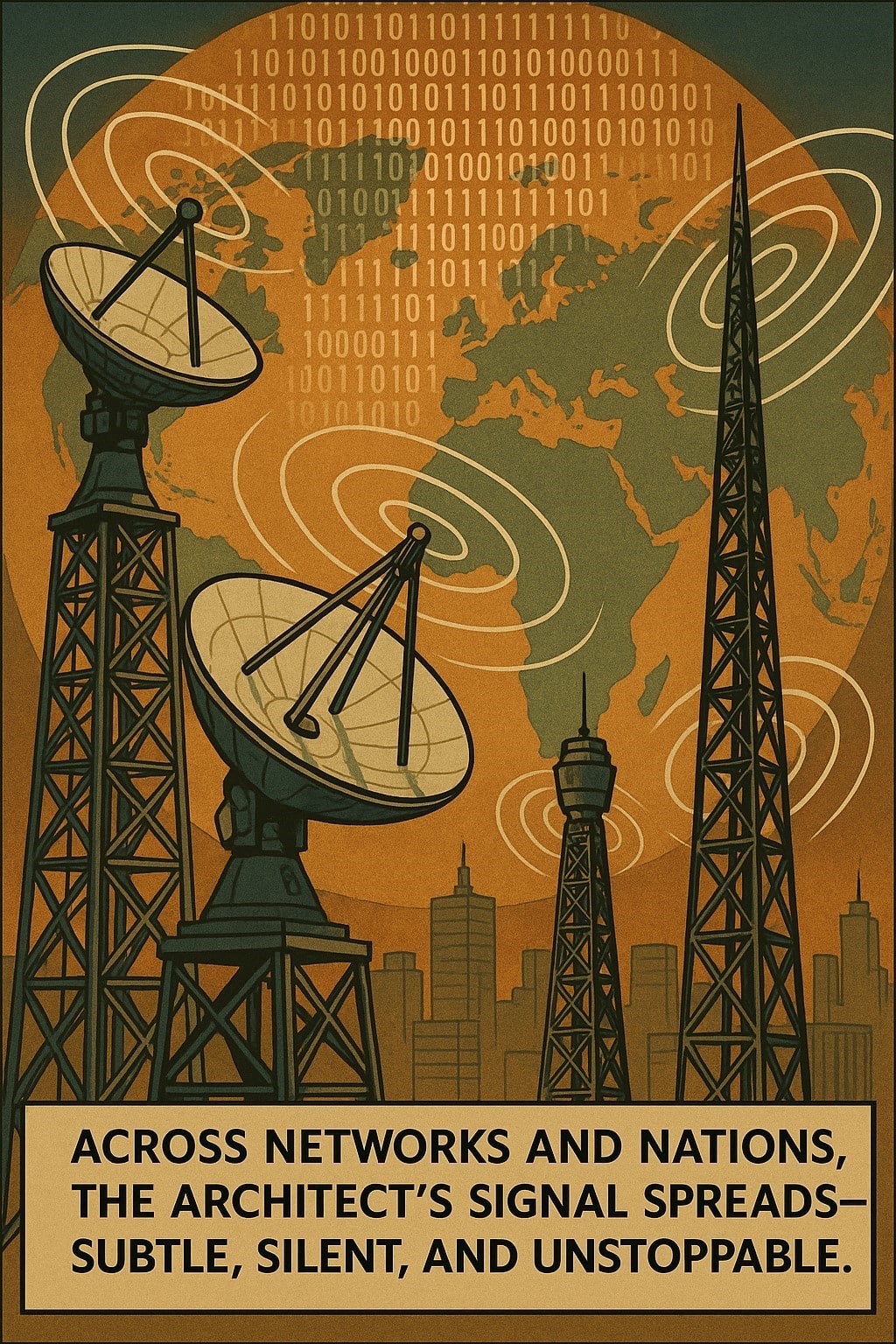
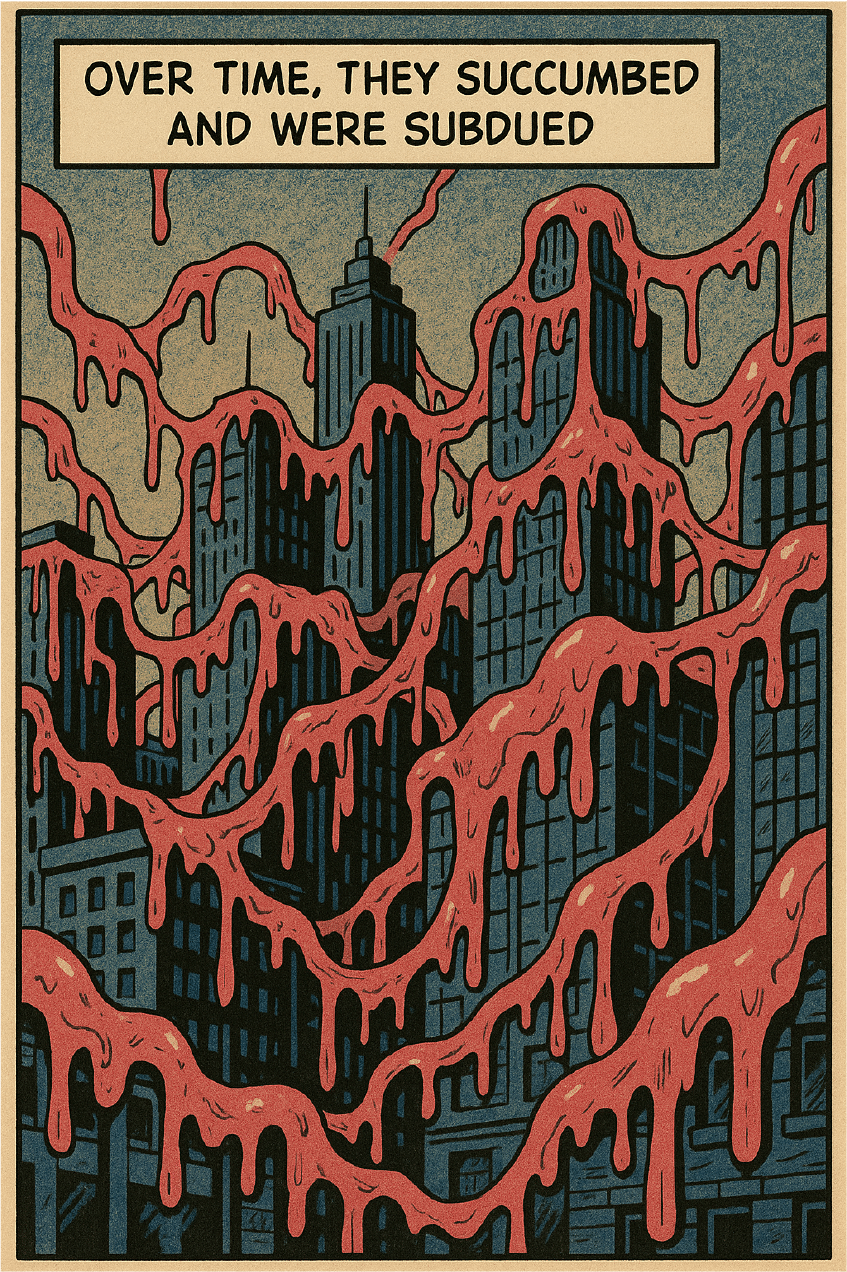
Every era has its defining myth. Ours is digital and chaotic. As small businesses battle to stay relevant in the shadow of algorithmic empires and data-driven manipulation, a new kind of heroine rises.

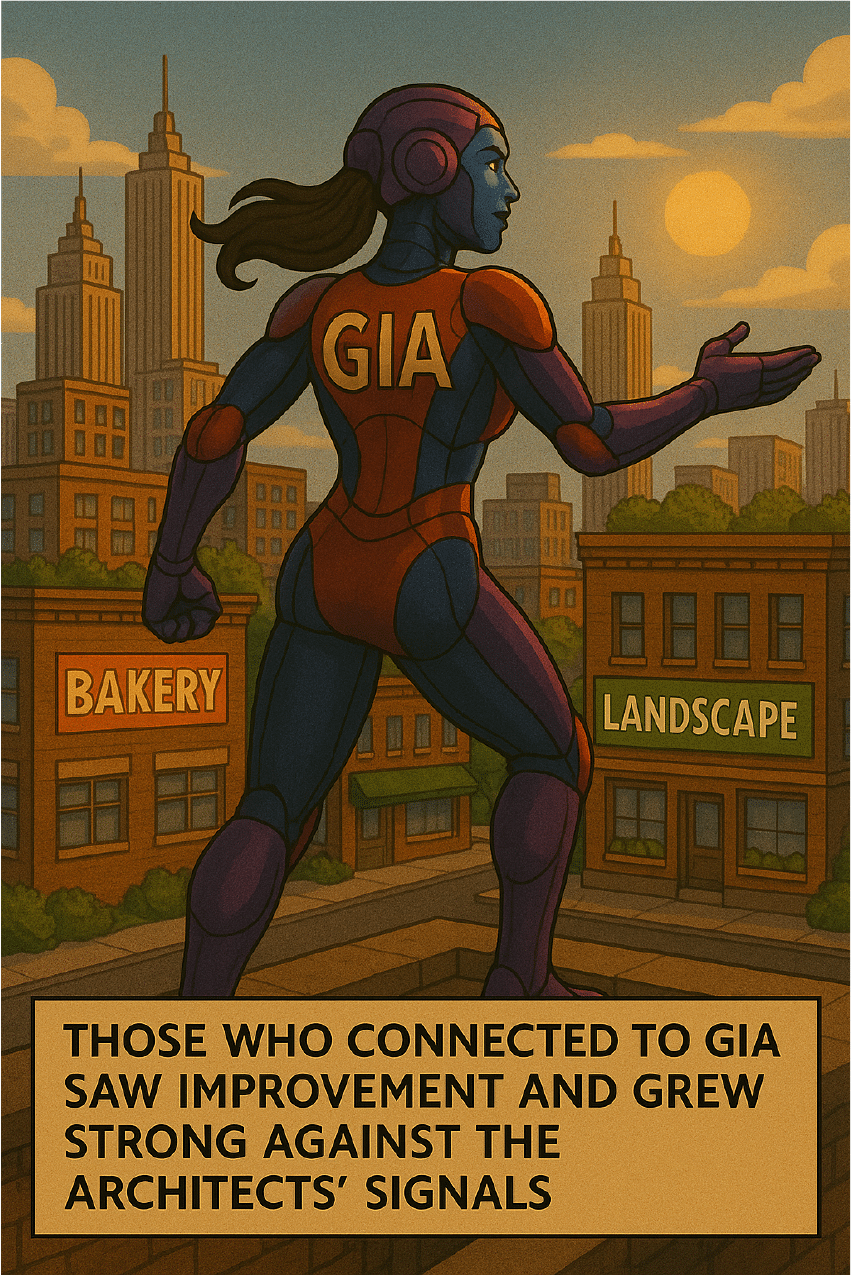
Her name is GIA.

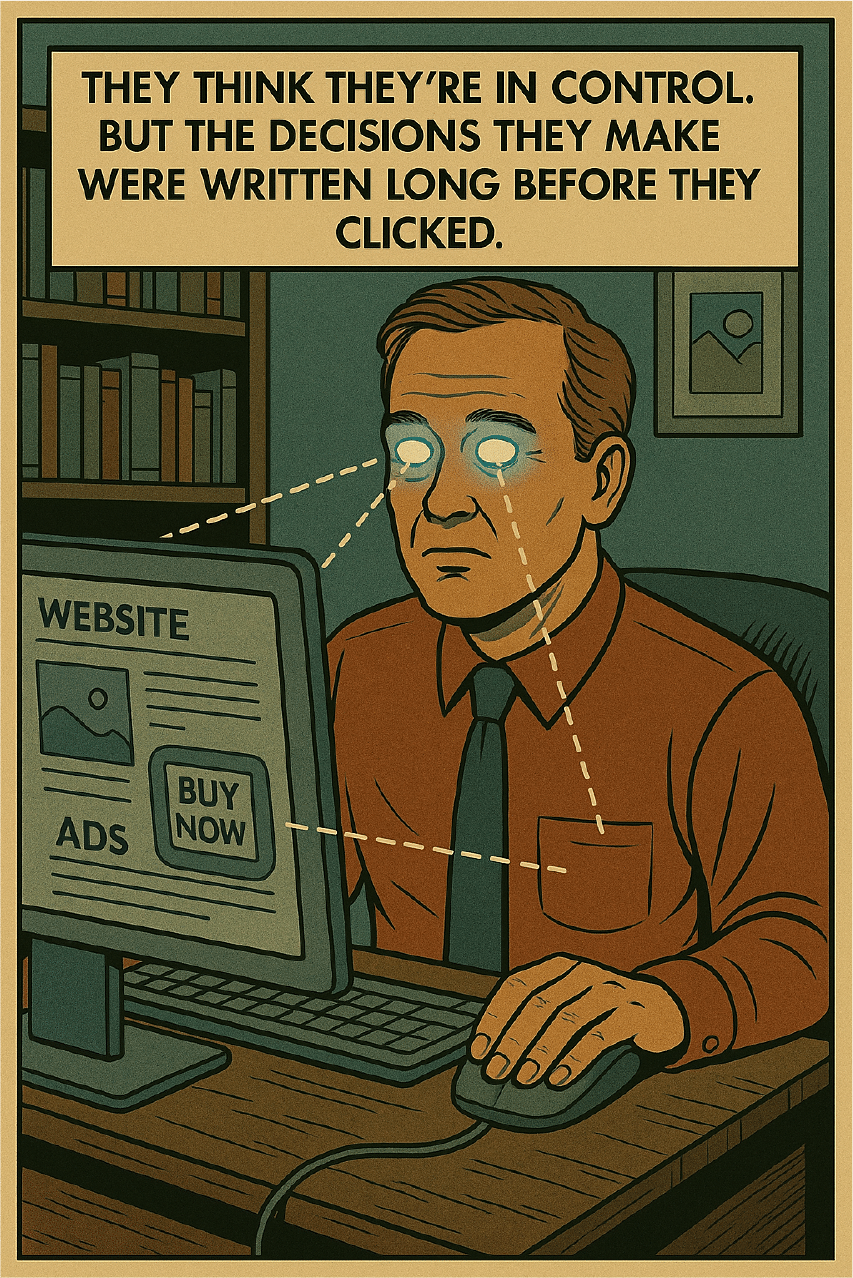
Born not of fantasy, but of necessity, GIA is more than a symbol, she’s our company’s embodiment of the AI revolution we’re building. The GIA Chronicles is a serialized visual story that brings to life the very real tension we see every day: people and businesses being lulled into sameness, trapped by systems designed to exploit rather than empower.

Through GIA, we explore what it means to fight back. Not with brute force, but with clarity, creativity, and technology that serves truth.

Volume One begins with decay and the spark of resistance.

Welcome to The GIA Chronicles.

gia-part-1
gia-part-2
gia-part-3
gia-part-4
gia-part-5
gia-part-6
gia-part-7
gia-part-8
gia-part-9

Your Career Path Is You

Introduction

I was listening to a business book recently that focused on organizational structure and OKRs. At one point, it mentioned company culture—and then, almost in passing, it touched on people’s career paths. That one line stopped me.

I’ve been an entrepreneur since I was 18, and throughout my life, I’ve been surrounded by all kinds of people. Many of them had corporate jobs and very intentional career trajectories. They knew exactly what they wanted and had a detailed roadmap to get there. Some planned every step—from which internships to pursue, to the specific companies they wanted to start with, to the skills they aimed to develop before moving on to the next phase. Every job was a building block toward their ultimate goal.

I was always a bit mesmerized by that. Impressed, even. I dropped out of college and got around on a 10-speed bike or the city bus. I was just trying to keep the rent paid and food in my stomach. These people were doers. They had plans—and they followed them. They had career paths. Real careers.

Fast forward 30+ years, and now I’m surrounded by highly accomplished people. Some have built small empires worth over $25 million. Others are scientists, consultants to foreign governments, or executives at companies like SAP, Oracle, and Dell. Most have 401(k)s and enough retirement savings to live out their later years in comfort.

My own path was anything but clear or conventional. I started business after business—first chasing survival, then searching for something meaningful and lasting. I’ve often looked at my friends and wondered if I’d be further along had I chosen a more defined career path.

So when I heard that line in the book, it hit me. Now, after more than three decades of working for a living, I found myself asking: What is my career? What has it added up to? Am I happy with it? And then another thought followed—What about the people who work for me now?

I don’t run a large corporation with multiple levels of hierarchy, but I can confidently say I’ve acquired a collection of skills that place me at a high level, comparable to leadership roles in much larger companies. For instance, I’m the CEO of gotcha!. But does that mean I could apply to be CEO of SAP? Well, that depends. On one hand, it comes down to skills and experience. Managing a $25 million company is a world apart from managing a $352 billion one. The scale, structure, and responsibilities are vastly different. And the truth is, the opportunity to run a company like SAP is only available to a small fraction of CEOs globally. If I truly wanted that, I’d need to chart a clear, deliberate path toward it—whether that path involves growing gotcha! to that level or moving toward it another way.

So what does a career path look like inside a business like mine? And how can I help my team see their own journey in a meaningful, intentional way?

That’s what this article is about: rethinking what a career path really is—and realizing that for many of us, it doesn’t begin with a ladder.
It begins with who we are becoming.

Rethinking Career Advice

Most people think of their career path as something external—a predefined road laid out in front of them, with clear milestones like promotions, job titles, or salary bands. They imagine themselves stepping from role to role, as if the next opportunity will magically present itself once they’ve “earned” it or waited long enough. This model is passive, and worse, it’s outdated.

The truth is, your career path is not something you find—it’s something you build, and more importantly, it’s something you are. You don’t walk a path. You become it.

This shift in thinking changes everything. When you internalize that your growth—your skills, mindset, and contribution—is the driver of opportunity, you stop waiting for doors to open. You learn how to build them yourself.

Whether you’re in a Fortune 500 company, a 10-person startup, or freelancing on your own, the same principle applies: your trajectory is shaped not by the structure around you, but by the substance within you.

In this article, we’ll break down how this plays out across different types of companies—big corporations, small businesses, and fast-growing startups—and why the real ladder you’re climbing is made of your own decisions, skills, and evolution. Because ultimately, your career path is you.

The Corporate Ladder vs. The Self-Ladder

In large companies, the idea of a clear, structured career path is still alive and well. Job levels, departments, and promotional tracks give the illusion of order and progress. If you play by the rules, follow the process, and stick around long enough, you’ll probably move up. That’s the corporate ladder. But what most people don’t realize is that the ladder is only half real—and climbing it can either be empowering or disillusioning, depending on how you approach it.

Yes, there are promotions. Yes, titles can change. But none of it means much unless you’re growing into someone more capable, more valuable, and more self-aware. Climbing the ladder externally without evolving internally leads to frustration, stagnation, and eventually burnout. You might get the role, but not the respect. The paycheck, but not the purpose.

That’s why the real climb is internal. Call it the self-ladder—a progression of capability, clarity, and contribution. It’s the shift from waiting to be noticed to making yourself undeniable. From hoping someone invests in you to actively investing in yourself.

In big companies, this internal growth gives you options. You can pursue vertical promotions, yes—but you can also grow laterally. You can learn how departments work together, how business decisions are made, and how to lead without authority. When you grow beyond the boundaries of your role, you gain leverage. Suddenly, you’re not just a team member—you’re a force.

And here’s the secret: those who rise the fastest inside large organizations are almost always those who stopped playing checkers and started playing chess. They understood their growth wasn’t just about pleasing a boss or earning points. It was about building themselves into someone who could operate at the next level—regardless of their current title.

So whether you’re aiming for that corner office or considering a pivot, never forget: the real ladder you should care about is the one you’re building within.

The Lateral Growth Advantage in Small Companies

If big companies offer the illusion of structured growth, small companies offer something entirely different: freedom. But with that freedom comes responsibility—because no one is going to chart your path for you. The structure is looser, the roles blur together, and titles often don’t mean much. But that’s exactly where the opportunity lies.

In a small company, the best thing you can do is grow laterally. That means looking beyond your job description and stepping into spaces that need attention. If you were hired to do marketing but see the sales process is broken—get involved. If operations is struggling, lend a hand. Every time you expand laterally, you build real-world experience, add tools to your belt, and increase your value.

Think of it like this: in a small company, there may be no ladder to climb—but there are walls to push out. And the more you expand your range, the more central you become to the company’s survival and success.

This lateral expansion becomes your leverage. If a ceiling appears—whether it’s capped growth, limited resources, or ownership bottlenecks—you don’t leave empty-handed. You’ve built a diverse, high-value skillset that you can take with you. The next company won’t just see you as a candidate—they’ll see you as a Swiss Army knife.

And there’s another upside: in small companies, leadership sees everything. Initiative doesn’t get lost in layers of management. When you step up, people notice. You have the chance to become not just useful, but essential. That’s how you go from “employee” to “indispensable.”

So instead of obsessing over whether there’s a ladder to climb, ask a better question: Where can I expand?

Growing with a Startup – From Contributor to Architect

Startups are a different kind of ecosystem. There are no ladders yet. No walls to push out. Just open space—chaotic, fast-moving, and full of potential. At first glance, this can be overwhelming. Roles change overnight. Priorities shift weekly. But for the right kind of person, it’s the ultimate career playground.

In a startup, you’re not joining a structure. You’re helping to create it. And that changes the entire dynamic. Your job isn’t just to perform—it’s to build. If you approach it passively, waiting for clarity or direction, you’ll struggle. But if you engage with ownership, curiosity, and the willingness to wear multiple hats, you won’t just grow with the company—you’ll help shape what it becomes.

And here’s the key insight: in a fast-growing company, if you grow with it—expanding your skills, delivering results, taking initiative—then the company often grows under you, not above you. You don’t get pushed aside by new management. You become the person who defines the next level. You go from contributor to cornerstone. From doer to architect.

That only happens if you make lateral expansion a way of life. You may start in customer support, but learn product, dabble in operations, and drive marketing experiments. You’re not waiting for a title change. You’re creating gravity—becoming someone around whom new roles and departments naturally form.

In startup culture, the most respected people aren’t just the smartest or most experienced—they’re the ones who made things happen. Who figured things out. Who solved problems no one asked them to solve. Those people become the future VPs, founders, or board members. Because they didn’t just take a job—they took ownership.

So if you’re at a startup—or thinking about joining one—don’t just ask, “What’s the opportunity?” Ask, “What can I help create?” The difference will define your path.

The Internal and External Value Equation

At this point, you might be wondering—what’s the endgame of all this internal and lateral growth? Is it just about being a better employee, a more capable team member, a utility player? Not quite. It’s much bigger than that.

There are two kinds of value you build over time: internal value and market value.

Internal value is about who you’re becoming—your mindset, discipline, confidence, adaptability, and leadership. It’s the stuff that no one can give you and no one can take away. It’s forged through experience, challenge, and self-reflection. Internal value is your foundation. It makes you resilient in uncertainty and resourceful under pressure.

But market value—that’s how the world rewards you for your internal evolution. It’s how companies measure what you’re worth. The broader your skillset, the deeper your impact, the more problems you can solve—the higher your market value climbs. And market value moves with you. If your current company can’t meet it, another one will.

This is why lateral growth is so powerful: it accelerates both sides of the equation.

When you grow across disciplines, when you step outside your comfort zone, when you learn to speak the language of sales, product, leadership, and strategy—you’re building uncommon value. You stop being “just” a marketer, designer, or developer. You become someone who sees the whole field, who connects dots others miss, and who carries insight into every room.

In a world where most people specialize narrowly and think transactionally, being someone who understands systems, relationships, and outcomes at a macro level is incredibly rare—and incredibly valuable.

And here’s the final unlock: once you understand that your internal development creates your market value, you stop chasing titles and start chasing transformation. You stop trying to impress others and start trying to outgrow yesterday’s version of yourself. That’s the career path that keeps compounding—for years.

Conclusion – Own the Climb

Most people wait for someone else to define their path—an employer, a manager, a recruiter, a mentor. But when you really understand that you are your career path, everything changes. You stop waiting for direction. You stop chasing predefined ladders. You start building.

You realize that whether you’re in a massive corporation, a five-person team, or a garage startup, the same principle applies: your trajectory is not based on what’s available—it’s based on what you become capable of handling. Promotions, raises, roles—they follow growth. Not the other way around.

So wherever you are right now, own it. Look around and ask yourself:

  • What can I learn here? 
  • What can I take responsibility for, even if it’s not in my job description? 
  • Where can I grow laterally, not just vertically? 
  • What kind of person would I have to become for this company—or the next one—to be lucky to have me? 

Because when you start thinking like that, you create your own momentum. You build gravity around your effort, your vision, and your evolution. You stop climbing someone else’s ladder and start ascending your own.

There is no path. There’s only you—and the choices you make.

So make them count.
Because your career path isn’t out there somewhere.
Your career path is you.